
The Holy Mysteries
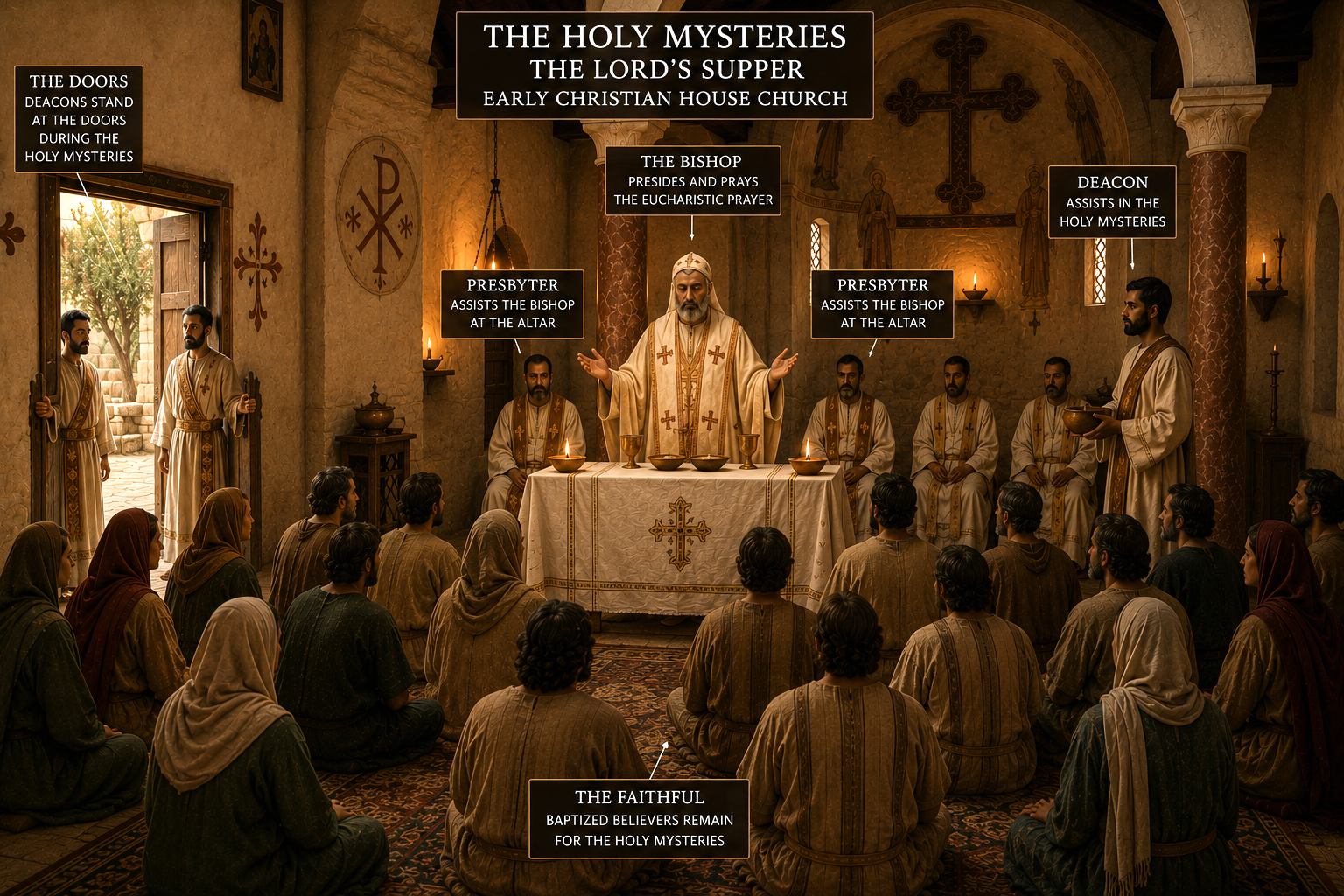
The ancient Church referred to the celebration of the Lord’s Supper as Tὰ Ἅγια Μυστήρια (Ta Hagia Mysteria) The Holy Mysteries.” This label helps us understand why Christians treated the the Lord’s Supper with such reverence.
The original Greek language the word is μυστήριον (mysterion), from which we get the English word mystery. In modern English, a mystery often means something unknown, puzzling, or challenging to solve. In the ancient Church, mysterion has a deeper and richer meaning. It refers to God’s saving work that was once hidden but has now been revealed through Jesus Christ.
St. Paul uses this word frequently:
- “The mystery hidden for ages and generations but now revealed to His saints.” [Colossians 1:26]
- “The mystery of Christ… has now been revealed to His holy apostles and prophets by the Spirit.” [Ephesians 3:3–5]
- “This is how one should regard us, as servants of Christ and stewards of the mysteries of God.” [1 Corinthians 4:1]
These “mysteries” are not secret teachings reserved for a select few. They are the saving acts of God revealed through Jesus the Son of God and entrusted to His Church. When Christianity spread into the Latin-speaking world, translators needed a Latin equivalent for the Greek word mysterion. They chose the word Sacramentum (Sacrament), something set apart as sacred.
“The Holy Mysteries” is not suggesting the Lord’s Supper is secret or unknowable. It is confessing God has revealed an amazing gift that surpasses human reason. Jesus Himself declares, “This is My body… This is My blood.” We know what He gives because He has spoken. We do not claim to explain how this is accomplished beyond what He has revealed in His Word.
Martin Luther refused to speculate about the manner of Jesus’ physical presence in the Sacrament. He simply confessed Christ’s words and believed He was there. The mystery lies not in uncertainty but in the marvelous reality that the incarnate Lord truly gives His Body and Blood in, with, and under bread and wine for you, for the forgiveness of sins.
Seen in this light, the ancient proclamation—
“The doors! The doors! In wisdom let us attend them!”
takes on even greater significance. The Church was about to celebrate the Holy Mysteries, the revealed and wonderful gifts of Christ. Those who had been Baptized, instructed in the faith, and united in the Church’s confession remained to receive these holy gifts. The Church’s concern was never secrecy but a care of souls, and faithful stewardship of the mysteries Christ had entrusted to His Church.
The Liturgy of the Ancient Church According to:
The Apostolic Constitutions (Book VIII)
The liturgy excerpts that follow are from one of the earliest complete descriptions of the celebration of the Lord’s Supper in the ancient Church.
The Dismissal
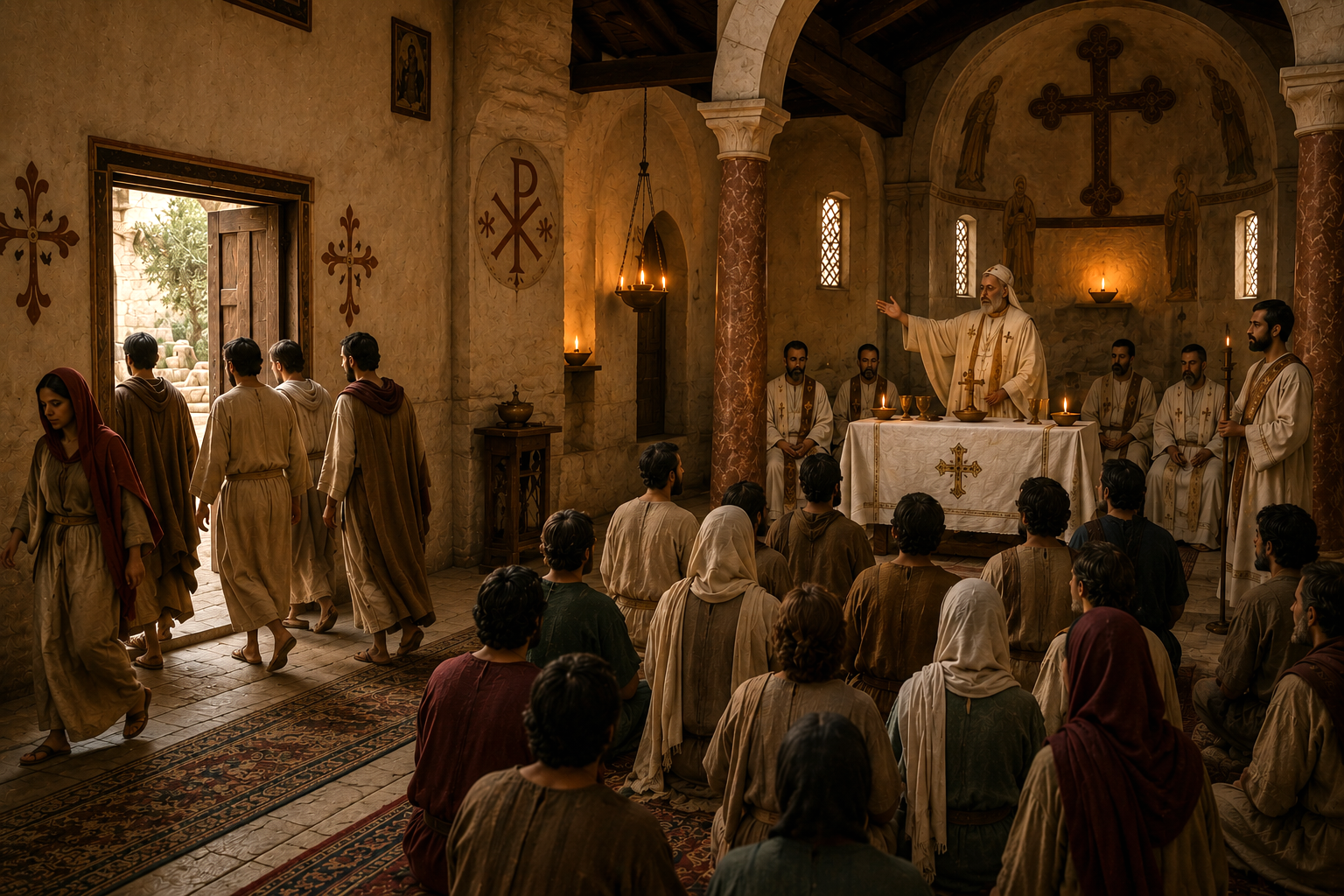
Deacon: Let none of the catechumens remain.
Let none of the hearers (visitors) remain.
Let none of the unbelievers remain.
Let all who are preparing for Holy Baptism depart.
Let those doing penance (a time of public repentance) depart.
Only the faithful remain.
Prayer of the Faithful
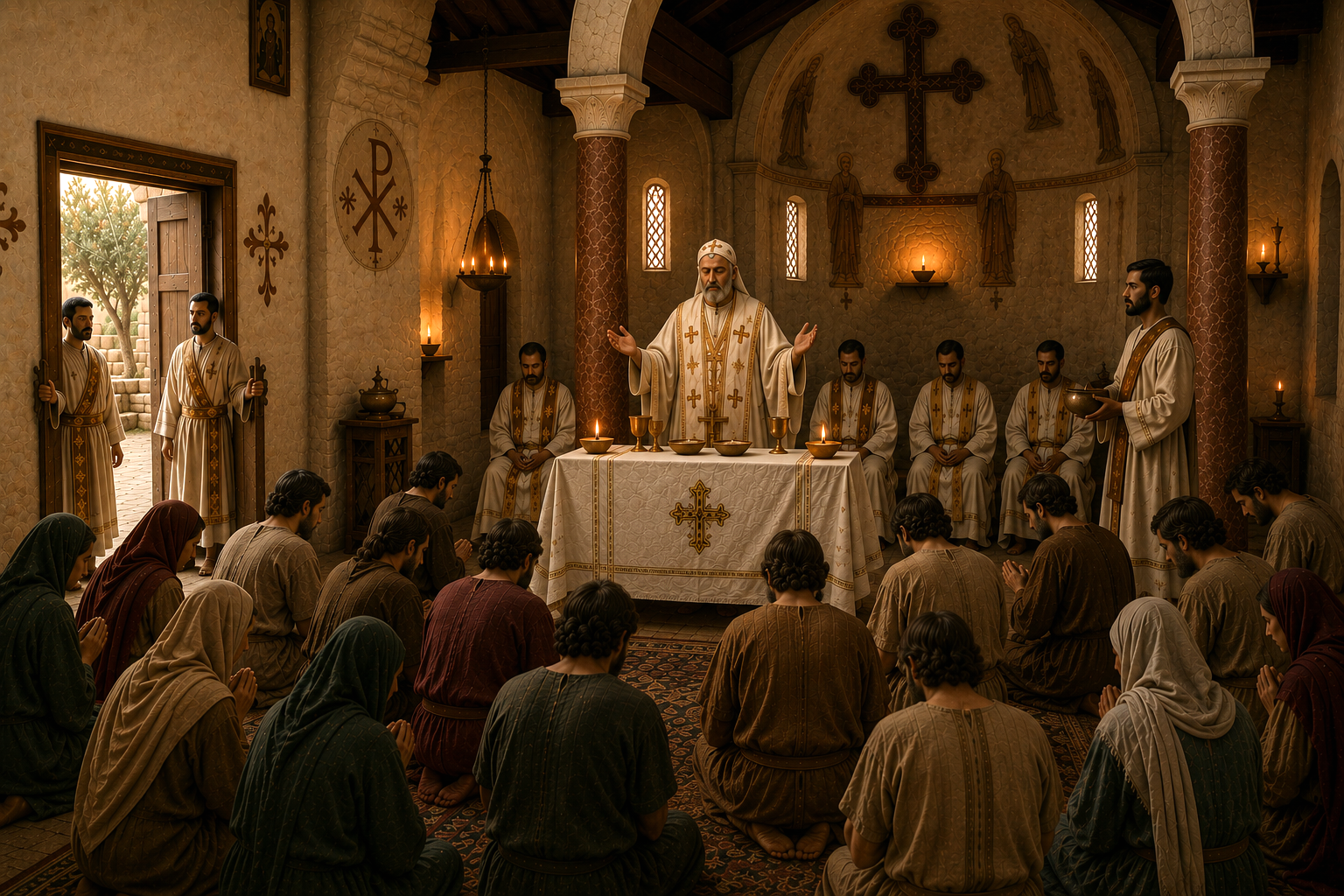
The pastor offers prayers for:
-
The holy Christian and apostolic Church.
-
Bishops (Pastors), presbyters (Elders), and deacons (Worship directors).
-
Civil authorities.
-
Travelers.
-
The sick.
-
Widows.
-
Orphans.
-
Those suffering persecution.
-
The whole people of God.
The congregation responds with Amen at the conclusion of the prayers.
The Sharing of Peace
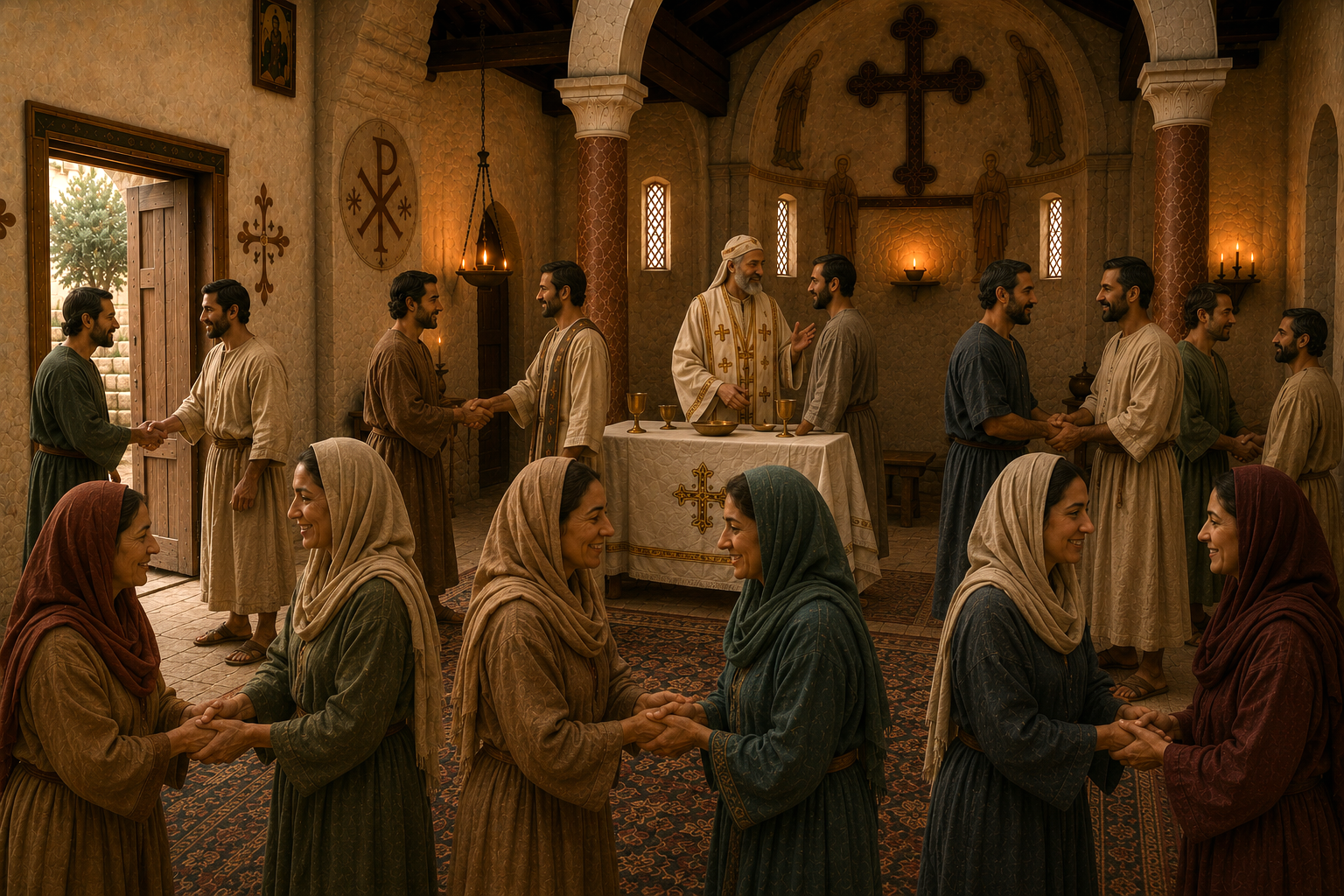
Deacon: Let us greet one another with a holy kiss (handshake).
Men greeted men.
Women greeted women.
The Great Warning
Deacon: Let none have any quarrel against another.
Let none come in hypocrisy (not confessing sin).
Stand upright before the Lord with fear and trembling.
Let us attend.
Congregation: Amen.
“The Doors! The Doors!”
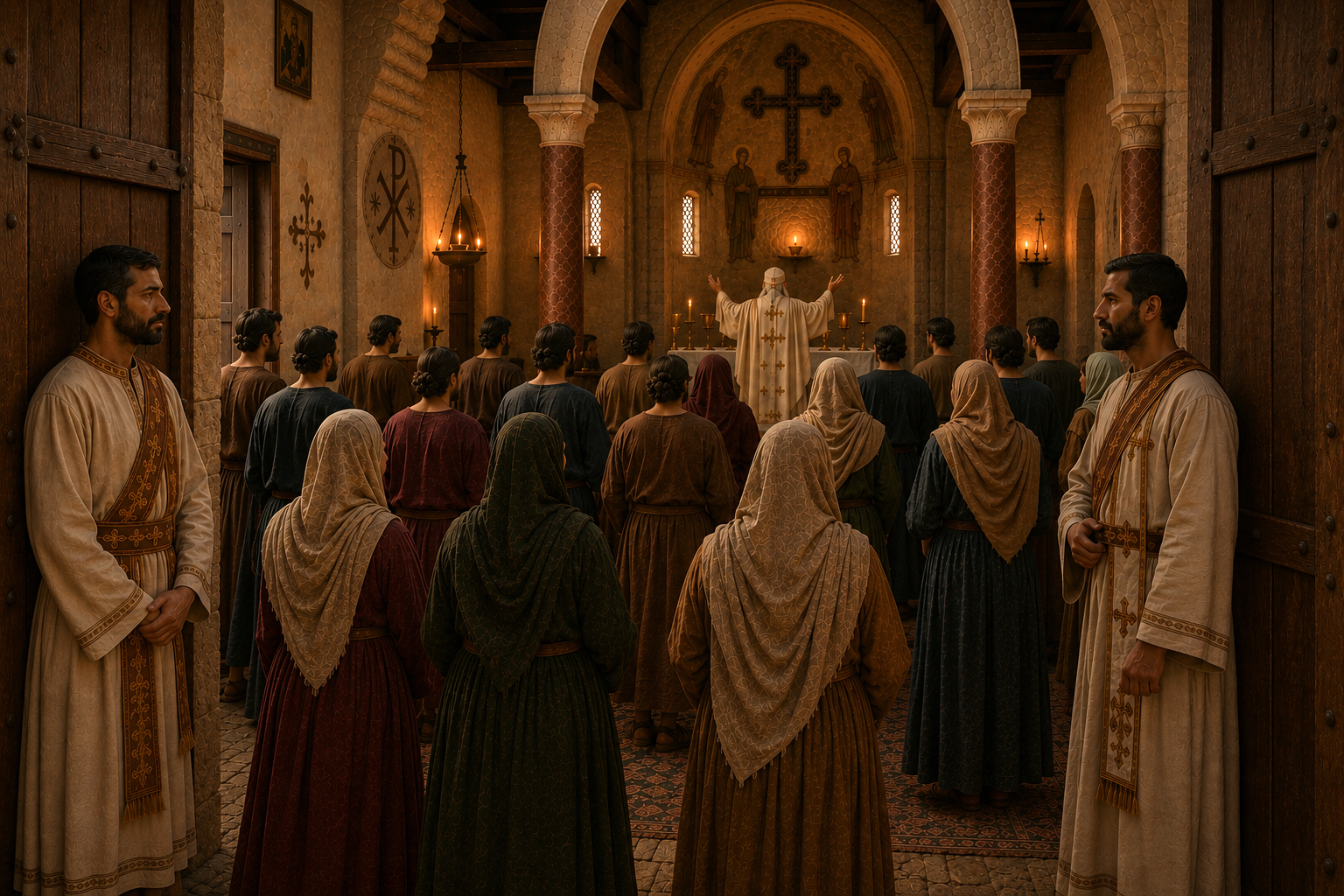
Deacon: The doors! The doors! In wisdom let us attend them!
At this point the deacons take their places at the entrances. The Apostolic Constitutions instruct:
“Let the deacons stand at the men’s doors, and the sub-deacons (acolyte) at those of the women, that no one may go out or come in, nor the doors be opened during the presentation of the bread and wine to be used in the Lord’s supper.”
The purpose was to ensure only the Baptized faithful remained for the celebration of the Lord’s Supper and the congregation remained reverent and attentive during The Holy Mysteries.
The Presentation of the Gifts
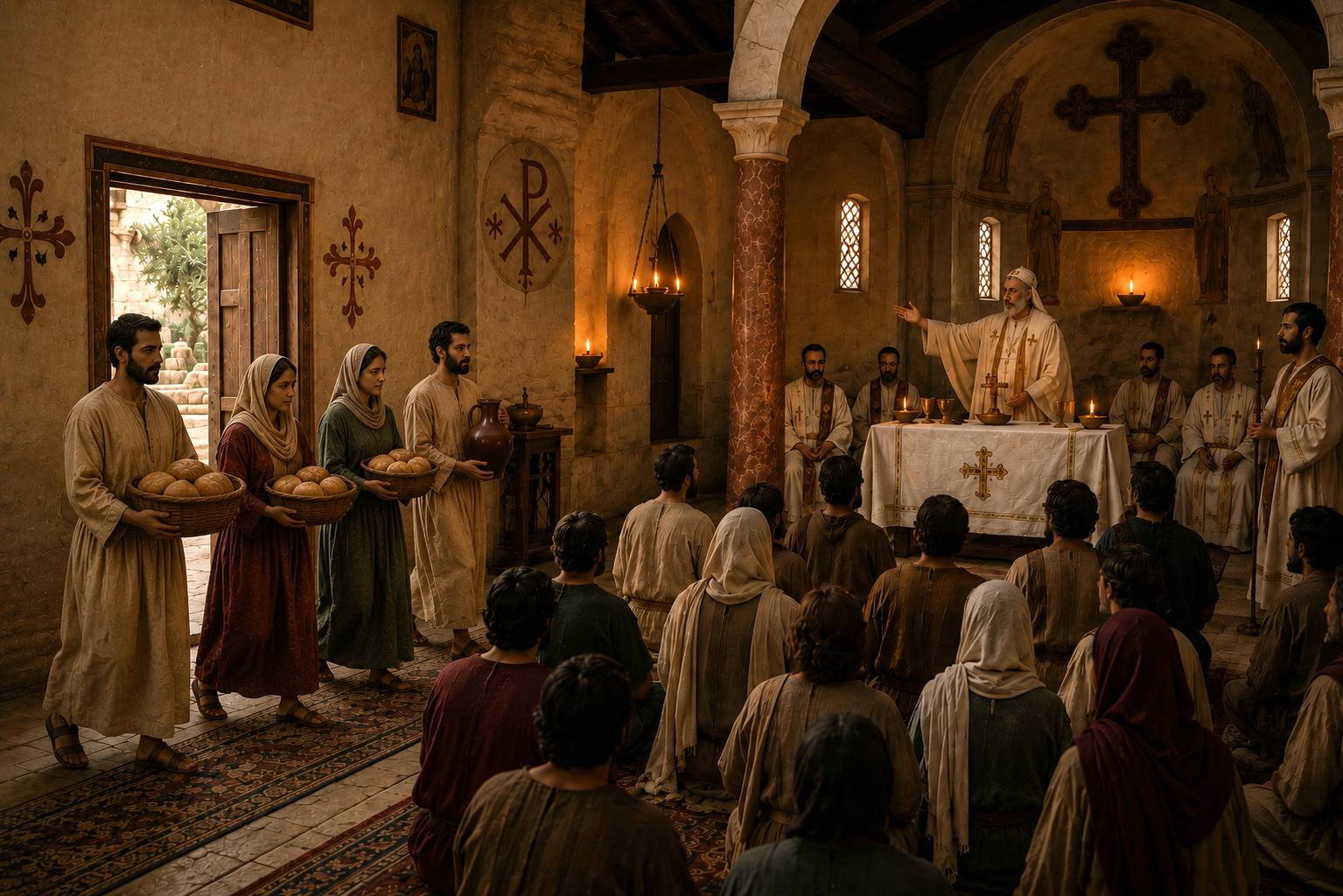
The bread and the cup are brought to the bishop (pastor).Unlike today, the bread and wine came from the congregation. Families would bring: bread and wine. The congregation brought the elements used in the The Lord’s Supper.
The Apostolic Greeting
Pastor: The grace of our Lord Jesus Christ,
and the love of God,
and the fellowship of the Holy Spirit
be with you all.
People: And with your spirit.
The Preface
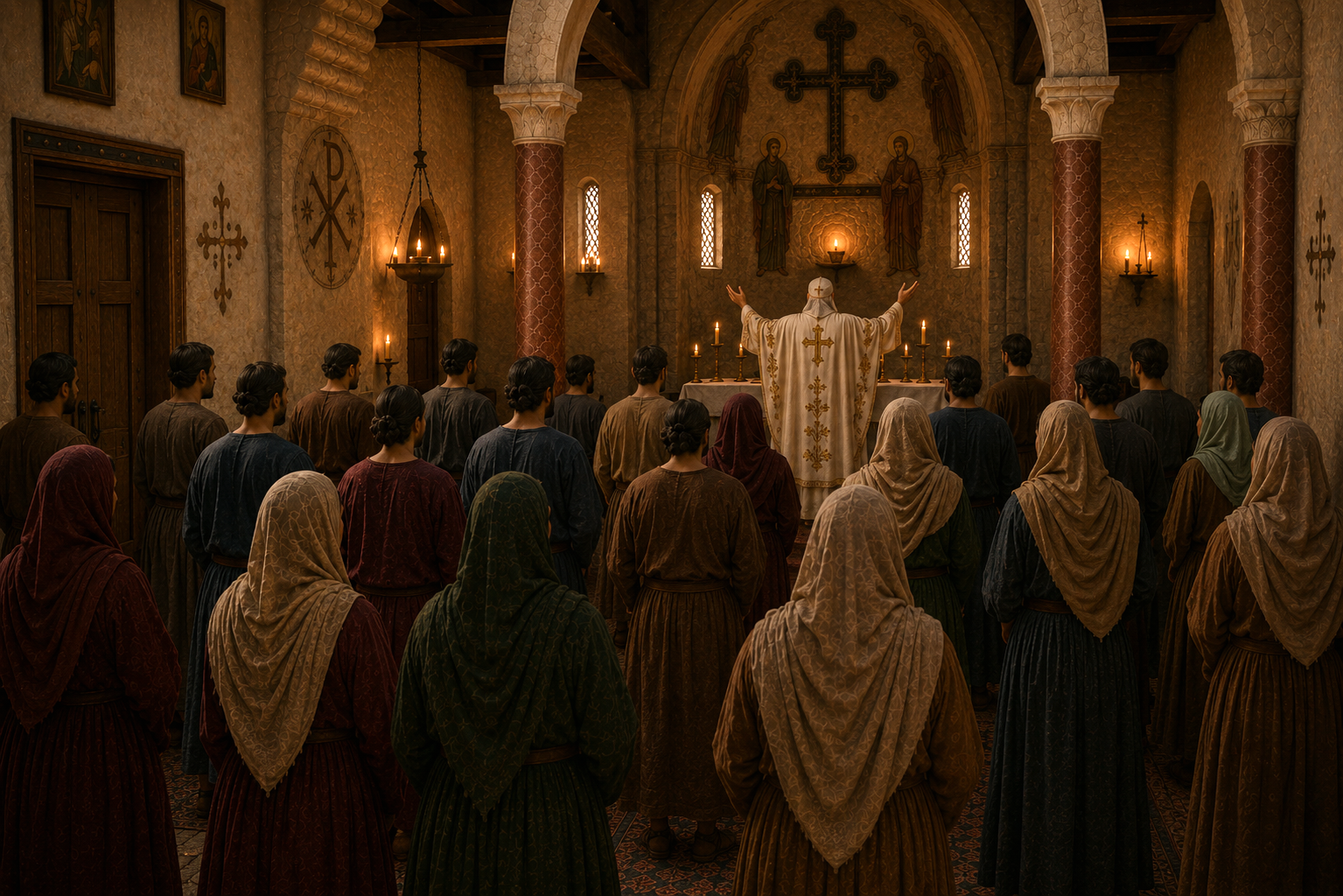
Pastor Lift up your hearts.
People We lift them up unto the Lord.
Pastor Let us give thanks unto the Lord.
People It is good and right.
The Great Eucharistic Prayer
The pastor gives thanks for:
-
Creation.
-
God’s providence and care.
-
The Fall into sin, God’s mercy.
-
God’s promises.
-
The Incarnation.
-
Jesus’ earthly ministry.
-
His Passion (Suffering).
-
His Resurrection.
-
His Ascension.
-
His promised return.
The Sanctus
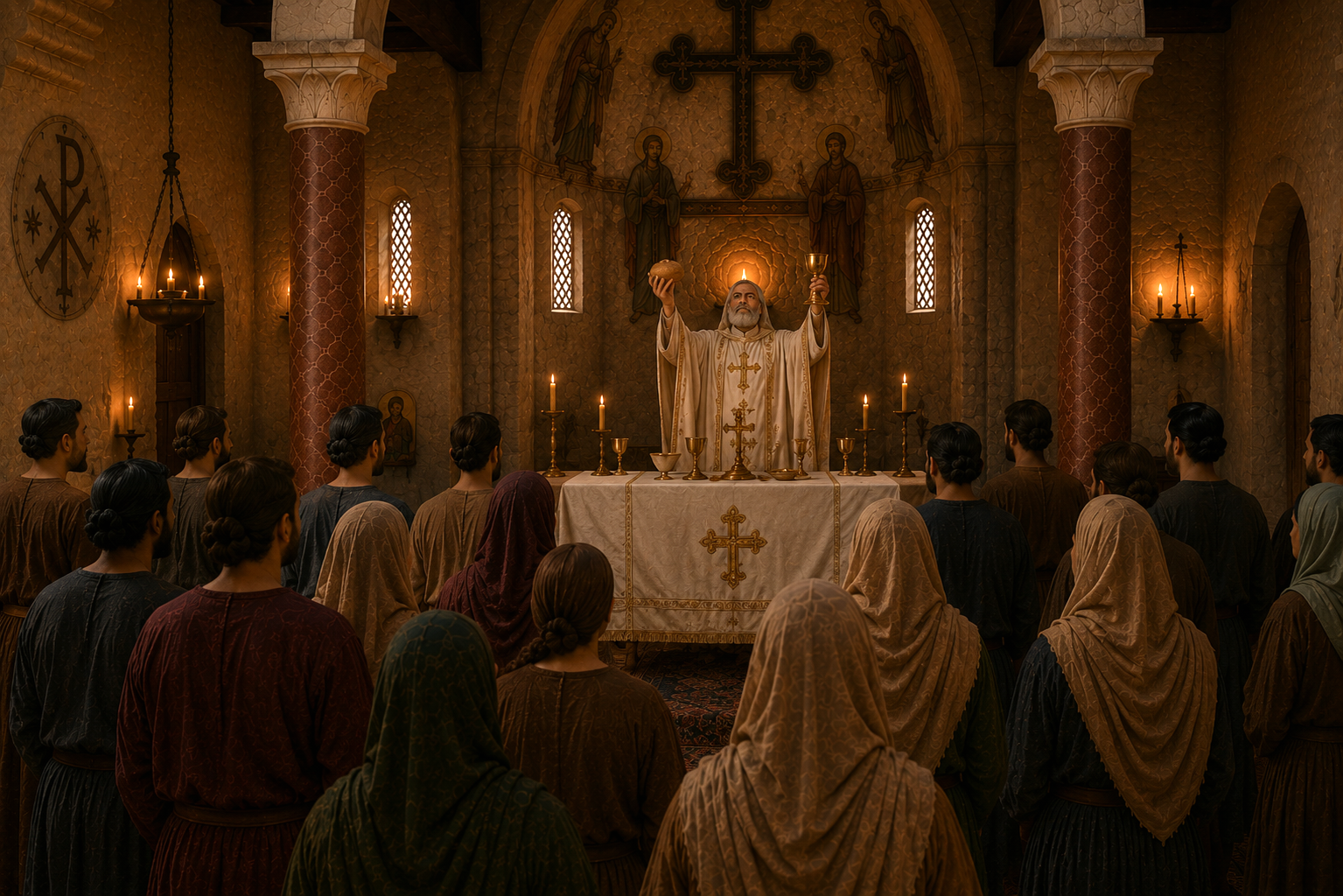
All: Holy, Holy, Holy, Lord God of Hosts (Armies). Heaven and earth are full of His glory. Blessed be He forever. Amen.
The Words of Institution
The pastor repeats the words of our Lord Jesus Christ spoken on the night when He was betrayed.
-
“This is My Body, which is for you. Do this in remembrance of Me.”
-
“This Cup is the new covenant in My Blood. Do this, as often as you drink it, in remembrance of Me.”
The Memorial
The Church remembers:
-
Christ’s death.
-
His burial.
-
His Resurrection.
-
His Ascension.
-
His own promised Second Coming.
The Invocation
The pastor prays the Holy Spirit would bless the gifts and sanctify (make holy) the faithful who receive them.
Intercessions
Prayers are offered for:
-
The Church throughout the world.
-
Faithful pastors.
-
Civil rulers.
-
The sick.
-
Travelers.
-
Those in every kind of need.
The Lord’s Prayer
All: Our Father, who art in heaven…
The Invitation to Communion
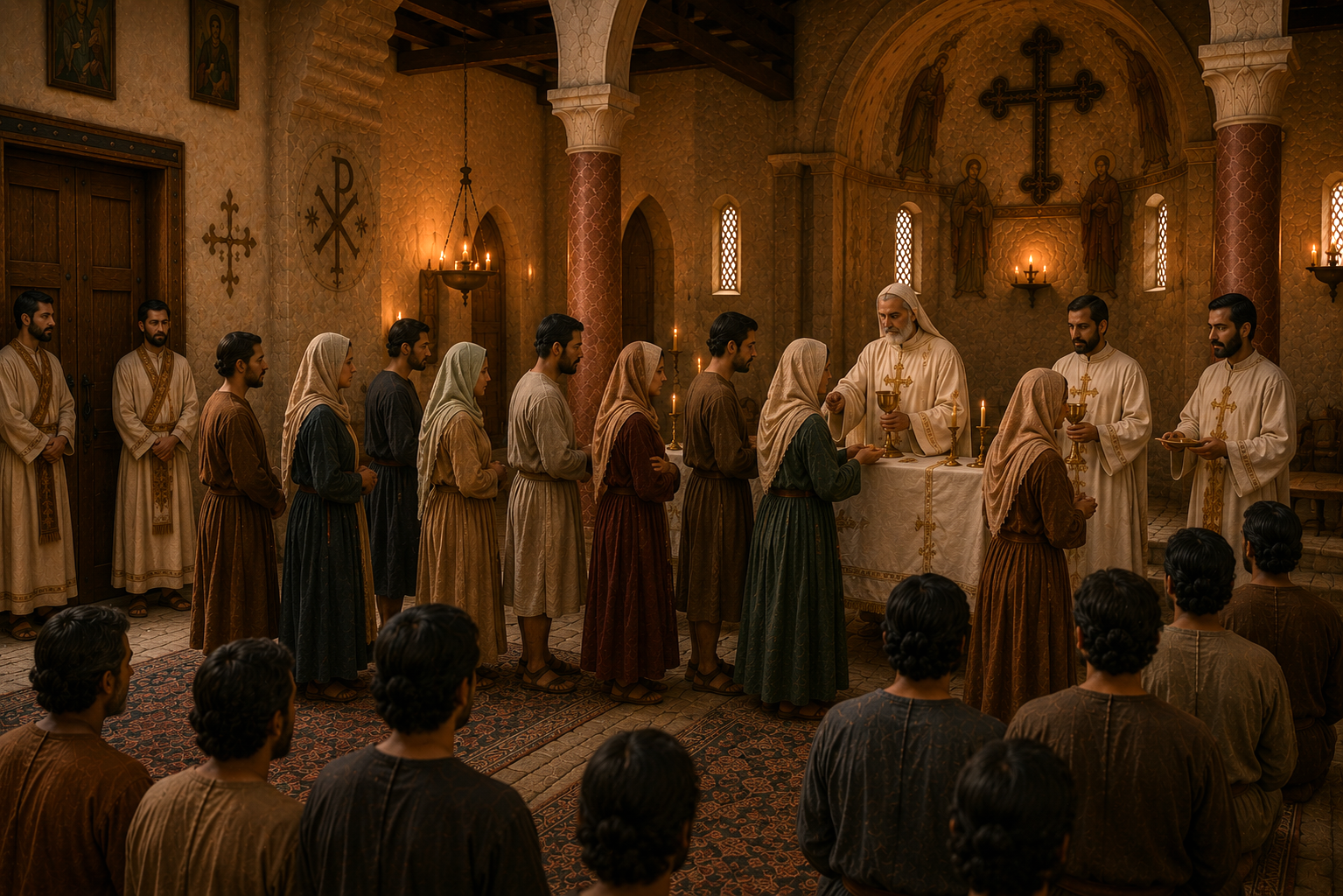
Pastor: Holy things for the holy.
People: One is Holy. One is Lord.
Jesus Christ, to the glory of God the Father. Amen.
Holy Communion
The Pastor communes himself.
The Elders and Deacons commune.
Then the congregation receive the Body and Blood of Christ.
Thanksgiving
The pastor offers thanks for the gifts that have been received and prays they would strengthen the faithful in holiness and perseverance.
Congregation: Amen.
Benediction
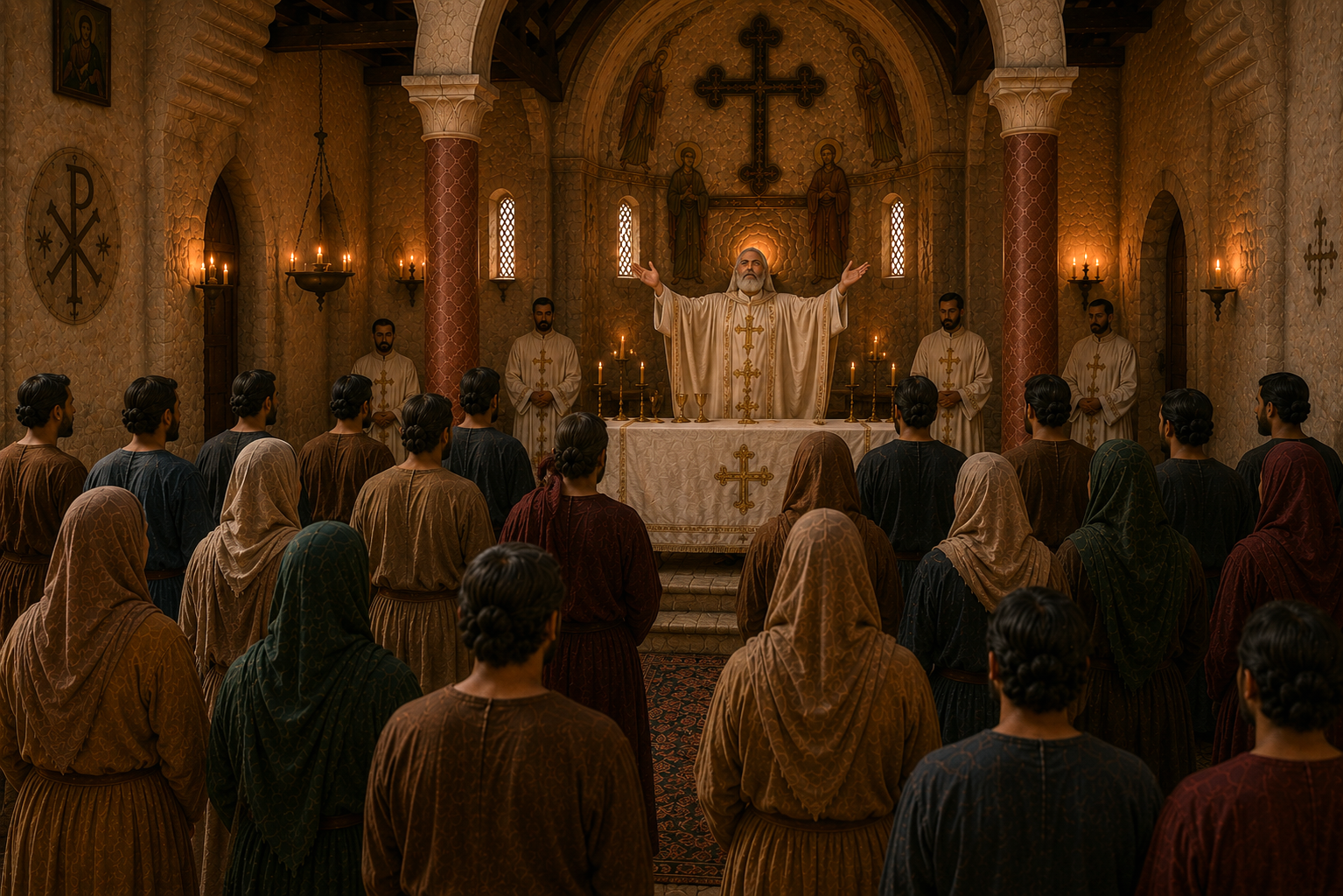
The pastor blesses the congregation.
The congregation departs in peace.
Historical Significance
This liturgy the ancient Church clearly distinguished between the Liturgy of the Word and the Liturgy of the Sacrament. After the catechumens and others not admitted to Holy Communion were dismissed, the deacon proclaimed, “The doors! The doors! In wisdom let us attend them!” The church doors were closed and guarded, and only the Baptized faithful remained for the celebration of the the Lord’s Supper.
This practice shows the early Church’s reverence for what it commonly called The Holy Mysteries. The careful preparation was not intended to exclude those truly seeking forgiveness, but to ensure that Christ’s Body and Blood were received with proper: faith, instruction, and repentance, following God’s Word and teaching in places like: 1 Corinthians 11:27–29.
